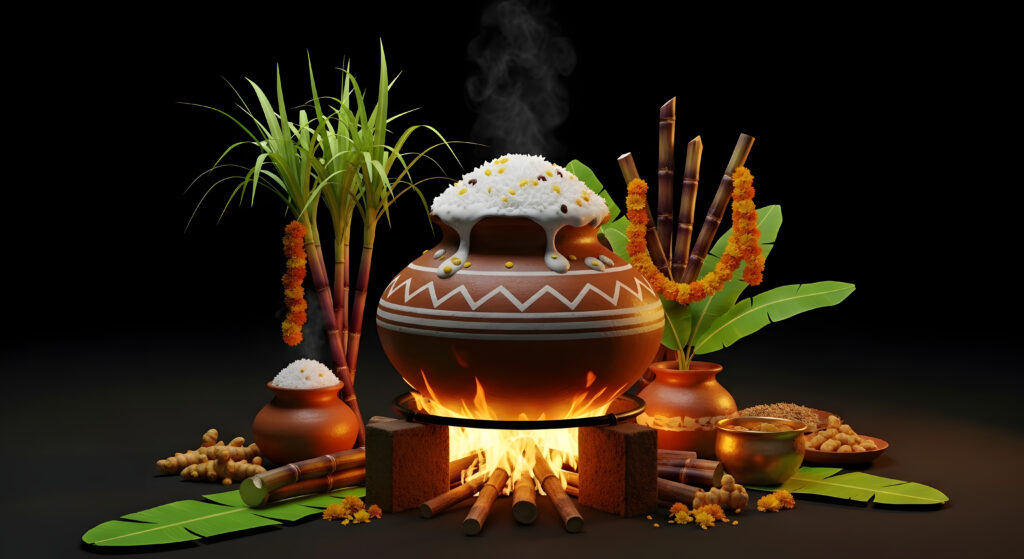
Makara Sankranthi is more than a harvest festival – it is a precise Ayurvedic Ritucharya marker aligned with solar movement, seasonal physiology, and community health. Celebrated across India as Makara Sankranthi, Pongal, Lohri, and Magh Bihu, it coincides with Makara Sankramana, when the Sun begins its northward journey (Uttarayana). Ayurveda recognizes this period as a critical seasonal transition influencing Agni (digestive fire), Vata balance, skin health, and mental well-being.
Is Agni Strong or Weak During Winter?
According to classical Ayurveda, Agni is strongest during Hemanta and Shishira Ritu (winter).
Cold external temperatures trap internal heat, intensifying digestion. If this strong Agni is not adequately nourished, it begins to consume body tissues (Dhatu paka), leading to dryness, joint pain, fatigue, and cracked skin.
This is why winter rituals emphasize nourishment, oiling, and grounding practices.
Why Are Pongal, Huggi & Khichdi Eaten During Makara Sankranthi?
Traditional Sankranthi foods across India follow one Ayurvedic principle:
Common elements include:
- Rice or millets
- Moong dal
- Ghee
- Jaggery
- Sesame (til / ellu)
These foods:
- Satisfy strong digestive fire
- Prevent tissue depletion
- Lubricate skin and joints
- Balance Vata aggravated by cold and dry winds
Sesame, described in Ayurveda as ushna (warming) and snigdha (unctuous), is the cornerstone of Sankranthi diets.
Abhyanga: Why Oil Massage Is Done Before Pongal/ Makara Sankranthi
In South India, the day before Sankranthi – Bhogi – is dedicated to Abhyanga (oil massage) followed by a head bath.
The body and scalp are massaged with sesame oil infused with jeera (cumin) and pepper.
Benefits of Abhyanga during Makara Sankranthi
- Pacifies Vata before solar transition
- Protects tissues from winter dryness
- Improves circulation and stiffness
- Calms the nervous system
- Prevents headaches and sinus congestion
Sesame oil nourishes deeply, while jeera and pepper enhance circulation and channel-clearing, making this ritual ideal for peak winter.
Kicchu Hayisu: Ayurvedic Animal Care During Makara Sankranthi
Sankranthi also honors farm animals.
In parts of South India, decorated cattle are gently guided across fire in the ritual of Kicchu Hayisu. Beyond symbolism, this practice:
- Removes ticks and parasites common in winter
- Relieves skin irritation naturally
- Reflects Ayurveda’s holistic view of human–animal–environment health
Ellu Bella: Social Health Through Ritual
The exchange of ellu bella (sesame and jaggery) during Sankranthi is a form of social harmony (Samajika sadvritta). Winter’s inward energy can cause emotional rigidity and conflict. Sharing sweet sesame preparations encourages:
- Soft speech
- Reconciliation
- Community harmony
Ayurveda recognizes mental and social balance as essential to health.
After Sankranthi: What Ayurveda Recommends
As Uttarayana begins:
- Agni remains strong but stabilizes
- Kapha gradually accumulates toward spring
Ayurveda advises:
- Continued nourishing diet in moderate portions
- Regular oil application
- Gradual increase in physical activity
- Avoiding sudden fasting
Makara Sankranthi: Ayurveda in Practice
Makara Sankranthi rituals are timeless science encoded as tradition, where food supports digestion, oil protects tissues, rituals heal animals, and sweets restore social harmony.
When the Sun changes direction, Ayurveda teaches us to realign with the body, nature, and one another.