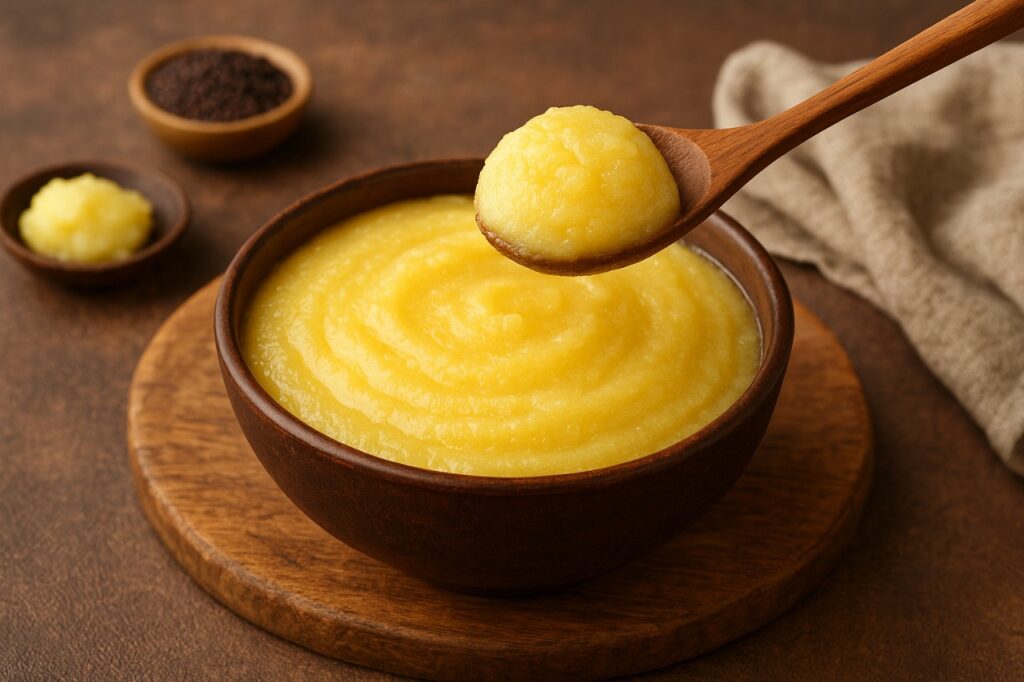
As winter sets in, many people experience an increase in appetite, dryness of skin, stiffness in joints, and frequent digestive complaints. Modern nutrition often responds to this by advising restraint – low fat. Ayurveda, however, offers a very different perspective. In Ayurvedic, winter is not a season for restriction, but for nourishment. And at the heart of this nourishment lies one timeless food: pure cow ghee.
Winter, human body, and pure cow ghee: An Ayurvedic Understanding
During winter (Hemanta and Shishira Ritu), the cold environment causes the body’s internal fire-Agni-to become stronger. This heightened digestive power demands adequate fuel. If this increased hunger is ignored or met with insufficient nourishment, the strong Agni begins to consume the body’s tissues, leading to:
- Dryness
- Fatigue
- Reduced immunity resulting in cold, cough, and fever.
To protect the tissues and support Agni, Ayurveda recommends snigdha ahara (unctuous, nourishing foods). Ghee is considered the best among them.
Why Pure Cow Ghee Is Ideal for Winter
* Pacifies Vata Without Weakening Agni
Winter naturally increases Vata dosha, which is dry, cold, light, and mobile. Ghee is: Snigdha (unctuous), Guru (nourishing) and calming.
Unlike many fats, ghee soothes Vata without dampening digestion, making it ideal when dryness and cold dominate.
* Supports Strong Digestion
Contrary to popular belief, ghee does not clog digestion when used appropriately. Ayurvedic texts describe ghee as: Deepana – enhances digestive fire and Pachana – supports digestion and metabolism. When Agni is strong, ghee acts as a carrier, helping nutrients reach deeper tissues.
* Nourishes All the Dhatus
Ghee is known as a Rasayana– a rejuvenative substance. Regular intake of properly prepared ghee helps nourish: Skin and connective tissue, Muscles and joints, Nervous system, and Reproductive tissues.
This deep nourishment becomes especially important in winter, when the body is meant to build reserves rather than deplete them.
* Enhances Ojas
According to Ayurveda, immunity is governed by Ojas, the refined essence of all tissues. Ghee supports the formation of Ojas, protects against seasonal illnesses, and prevents excessive dryness and weakness.
This explains why traditional winter diets across India include ghee generously.
* Calms the Mind and Nervous System
Winter dryness affects not just the body but also the mind. Ghee has a special affinity for the nervous system. It helps reduce anxiety and restlessness, supports sleep, and improves mental clarity. In Ayurvedic psychology, unctuous foods are grounding, something deeply needed in colder months.
How to Use Pure Cow Ghee in Winter
- Add melted pure cow ghee (melted using double boil method) to hot, freshly cooked meals.
- Use it in rice, khichdi, rotis, soups, and stews.
- Take a small quantity of ghee with warm water on an empty stomach every morning.
- Prefer ghee over refined oils for daily cooking. Unlike processed vegetable oils high in omega-6s, traditional cow ghee offers balanced fatty acids, vitamins A/D/E/K, and butyric acid for gut health.
- Use ghee in moderation, guided by appetite and digestion.
Who Should Be Cautious?
While ghee is generally beneficial in winter, those with: very poor digestion, Severe indigestion or ama, Certain metabolic conditions should introduce it gradually and under the guidance of a Vaidhya. Ayurveda always emphasizes individual constitution and digestive strength over blanket rules.
The modern fear of fat ignores seasonal intelligence. Ayurveda does not promote excess, it promotes appropriateness. In winter, when Agni is strong and tissues need protection, ghee is not indulgence; it is medicine in the form of food. Used mindfully, it supports digestion, immunity, mental calm, and overall strength – making it one of winter’s greatest allies.